Wednesday, July 20, 2016

Q&A with Britta Suppes, Capitol Region Watershed District

Britta Suppes, Monitoring Coordinator,
Capital Region Watershed District


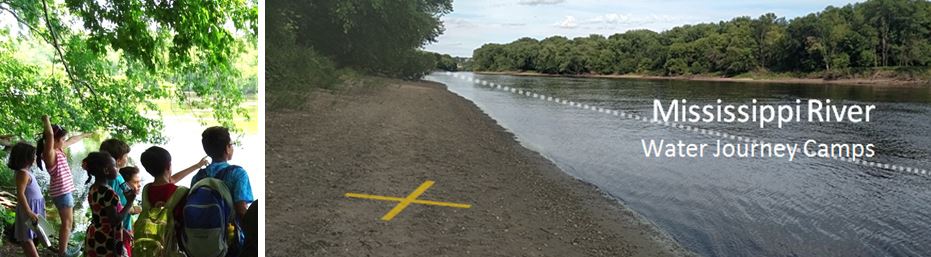
On Wednesday, July 20th, Campers went to St. Anthony Outfall to meet Britta Suppes and Joe Sellner from Capitol Region Watershed District (CRWD). They told campers about how the whole subwatershed drains to this point on the river, including the storm drain campers are studying. They also demonstrated water quality testing and told campers about sources of stormwater pollution and how to prevent some of those sources.

I had a chance to ask Britta some questions about her work:


Q: What do you do for your job?


A: At CRWD, I serve as the Water Quality Monitoring Coordinator. In my position, I coordinate all aspects of our Monitoring, Research, and Maintenance program, including monitoring station management, equipment purchasing, data collection, data analysis, and reporting. Through our monitoring program, we actively monitor all District water resources (stormwater, lakes, and wetlands) and utilize the data to inform project design and overall management decisions for water quality improvement.


Q: What do you like best about your job?


A: The most exciting thing about my job is that I get to enter storm tunnels to monitor stormwater flowing through them—it is both thrilling and interesting being in St. Paul’s underground! But I’d say the best part about my job is taking scientifically collected data and applying it to solve real-life water quality problems that show measureable results and improvements in water resources.


Q: What is your favorite thing about water?


A: My favorite thing about water is that it drives most every process on earth (aside from tectonic activity!)—our climate, our landscapes, our terrestrial ecosystems, and of course, all living things. Water is a necessity of life. I am particularly interested in watershed management because it is fascinating to think of all the pathways water can take from starting as a falling rain drop to eventually ending up in the ocean. Then to think about how land use, human activity, and natural processes and landscapes can influence that rain drop along the way, such as reduced water quality, an eroded hillside, or the formation of something incredible like the Grand Canyon.


Q: What is your favorite place on the Mississippi River?

A: My favorite place on the Mississippi River is right at the end of Pike Island at the confluence of the Mississippi River and the Minnesota River— I have visited here many times in both the summer and winter, and each time I am amazed thinking about these two very different water resources coming together. Both rivers come from contrasting landscapes, which is very apparent when you look at the color of the water. The Mississippi comes from the northern boreal forests and is mostly clear, and the Minnesota comes from the southern farm country and is brown and turbid. It looks like coffee meeting cream!


Q: What do you think people should know about water or that might surprise them about water?
A: A major source of pollution in Minnesota’s waters (lakes, streams, wetlands, and stormwater) is SALT! Salt (or Chloride) is used for de-icing roads in the winter months. Once salt-laden snow and ice melts in the spring, it runs off the streets into water bodies. Once that salt is dissolved in a lake or stream, it cannot be removed so concentrations in Minnesota water bodies are continuing to build up over time. Salt in fresh water systems can be very harmful to fish and plants that are used to salt-free environments. CRWD actively monitors chloride in the District in both lakes and stormwater in order to better understand the long term effects of chloride on water quality. 
 Thanks Britta and Joe for your time today and all the insights about stormwater!

Rain Camp Day 3 - From Sarita to the River

Campers bused from St. Paul Campus to find out where the rain goes when it overflows from Sarita Wetland. They:
  • Traveled to the St. Anthony Outfall to see the giant tunnel where the stormwater comes out
  • Met Britta Suppes and Joe Sellner from the Capital Region Watershed District, who monitor water quality here and other locations in the watershed and talked about how people can help keep stormwater clean to help the river.
  • Met Brian Goodspeed, a park ranger from the National Park Service who talked about the Mississippi River's significance to the country and the world
  • Went further downstream, to Crosby Farm Park to see a floodplain forest and spend time by the river.
The story of rain that campers are following is being built in a GIS Story Map HERE!

Tuesday, July 19, 2016

Rain Camp Day 2 - Storm Drain to Sarita

Campers met Cathy Abene, Civil Engineer for the University of Minnesota to find out what happens to the rain after it goes down the storm drain. They learned this is also called a "catch basin."


Campers used a map that shows symbols for catch basins, maintenance holes, area drains, and other things we can see on the ground that are part of the stormwater system.

Here's a picture from the overflow.


Monday, July 18, 2016

Q&A with Kate Flick

Kate Flick is the lead teacher campers met today. She loves working with kids to explore place and story. I asked her some questions to learn more:

Q: What do you do for your job?
A: I am going for my PhD in Natural Resources trying to think about healing landscapes. I also work with the Institute on the Environment's Sustainability Education program where I get to do all sorts of fun education projects.

Q: What do you like best about your job?
A: I really like working with students, especially going on walks outside where we think about who the place is.

Q: What is your favorite thing about water?
A: I love all sorts of things about water but some of my favorite things are swimming and drinking it. It's one of the only things that consistently makes me go "ah."

Q: What is your favorite place on the Mississippi River?
A: I like going over by the West River Parkway and ambling about the cliff sides through the maple, cottonwood forest. And there's a beautiful white sand beach over there.

Q: What do you think people should know about water or that might surprise them about water?
A: People should know that water is life.

Thanks, Kate for leading the campers on water journeys through the landscape!

Q&A with Rebecca Barney

One of the teachers that campers met today is Co-Teacher and Map Art Leader, Rebecca Barney, Research Assistant, U-Spatial, University of Minnesota

I asked her a bit about her work and feelings about water.

Q: What do you do for your job?
A: I make maps! Lots and lots of maps.

Q: What do you like best about your job?
A: I get to choose what goes on the map, the colors I want to use, and to make sure it tells the story I want it to.

Q: What is your favorite thing about water?
A: It keeps me hydrated and clean!

Q: What is your favorite place on the Mississippi River?
A: The Washington Avenue Bridge, I like to walk accross it and look at the Mississippi.

Q: What do you think people should know about water or that might surprise them about water?
A: We drink the same water that Dinosaurs drank!

Thanks Rebecca for the GIS work and creative map activities you've planned for campers!

Rain Camp Day 1 - Where does the Rain Go?


Campers arrived to day 1 of Rain Camp at Institute on the Environment  on the U of MN Campus for a day full of activities like
  • Meeting the Storm Drain to ask "Where does the rain go?
  • Decorating their nature notebooks
  • Learning how to use the cameras
  • Finding Rain (an expedition to the roof!)
  • Picnic lunch at Cornercopia - the UMN student organic farm
  • and Rain Lands, a walking tour of places on St. Paul Campus that show different types of plants and soils that rain might land on when it comes from the sky. like a mushroom garden, a trial and display garden, a Native American Medicine garden or farm fields filled with Lester Soil. 
The story of rain that campers are following is being built in a GIS Story Map HERE!
We'll add to this throughout the week with pictures of and by campers, art work, and stories they collected about rain's path through the land.

Thursday, July 14, 2016

Oh good, Looks like rain this weekend!

What? ...Here's a clue... (count down to Rain Camp!)